
Master Guide
Dubai Expat Move-In Maintenance Checklist
Moving into a Dubai apartment or villa? Use this practical checklist for AC, plumbing, electrical, handyman, painting, and DEWA checks.
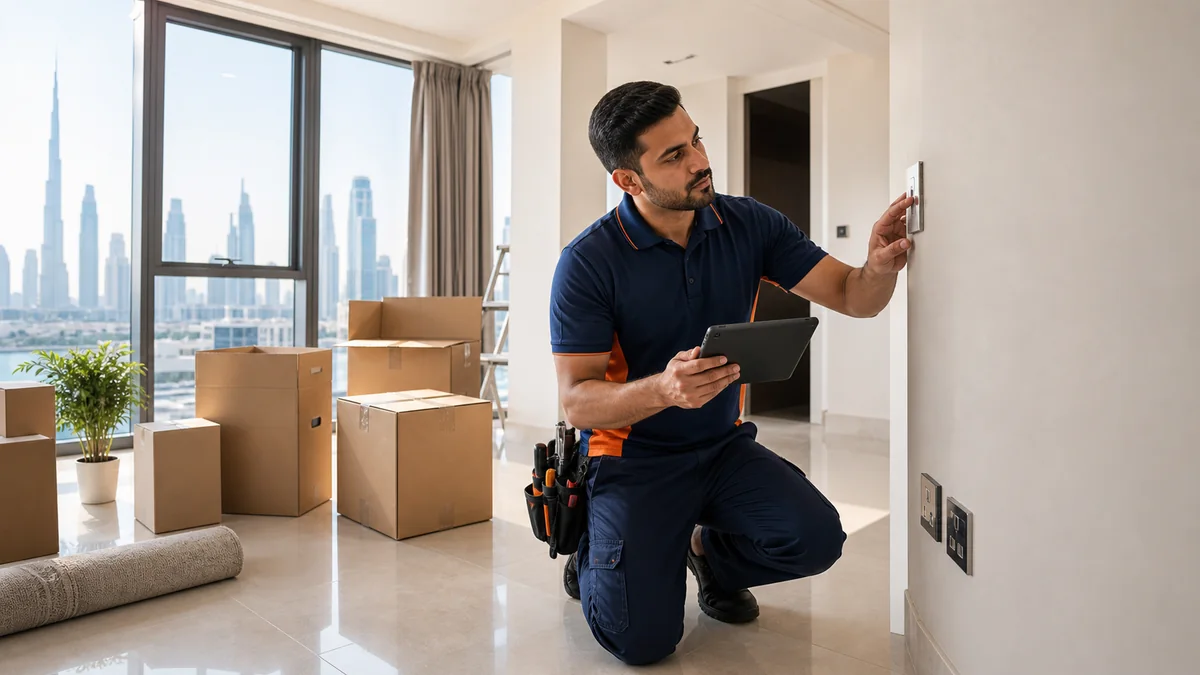
Moving into a Dubai home is easier when you inspect the property before furniture arrives. Start with AC cooling, water leaks, sockets, switches, and wall condition because these issues can disrupt the first week quickly.
Small issues are much cheaper to fix before move-in day becomes chaotic. This checklist is especially useful for JVC apartments, Dubai Marina towers, Business Bay rentals, and villas where community access rules may affect technician timing.
The First 60-Minute Move-In Inspection
Before unpacking, walk through the property with your phone camera. Record a slow video of every room, ceiling, wall, bathroom, kitchen cabinet, balcony, and utility area.
This protects you if a maintenance issue appears later. It also helps your landlord, agent, or technician understand whether the issue was pre-existing.
What to Capture First
Start with ceilings, AC vents, water stains, paint marks, broken handles, loose sockets, and visible cracks. Then record taps, toilets, water heater area, DB board, balcony drains, and any access panels.
Do not wait until boxes and furniture block everything. A technician can work faster when access panels, walls, and fixtures are still clear.
Why Dubai Move-Ins Need Maintenance Planning
Dubai properties often change tenants quickly. A unit may look clean at handover but still have weak AC, slow drainage, loose curtain brackets, marked walls, or hidden water heater issues.
In high-demand communities like JVC, Dubai Marina, Business Bay, Downtown Dubai, and Dubai Hills, handovers can be rushed. A structured checklist helps you slow the process down just enough to protect yourself.
AC Checks
- Test cooling in every room.
- Check for dripping water.
- Look for dirty vents or musty smells.
- Confirm thermostat controls work.
- Note whether cooling is billed through DEWA, chiller, or Empower where relevant.
AC is the first system to test because comfort depends on it immediately. Set each thermostat to Cool, lower the temperature, and wait long enough to feel whether the air changes.
Before moving your heavy furniture or wardrobes into a new villa or apartment, ensure your cooling system has been professionally reviewed. Deep desert dust and lingering moisture can hurt indoor air quality, so check The Ultimate Dubai AC Survival Guide to see whether your new home needs immediate AC cleaning or inspection.
What Normal Cooling Should Feel Like
The airflow should be steady, the air should become noticeably cooler, and the system should not make loud grinding or buzzing noises. A slight startup sound can be normal, but repeated rattling or electrical buzzing needs attention.
If one room cools and another does not, record both rooms in the same video. That helps identify whether the issue is room-specific airflow, a damper, a thermostat, or a wider system fault.
AC Red Flags
Water stains around vents, wet ceiling panels, musty smell, and weak airflow are red flags. Warm air from every vent is also a serious warning, especially before summer.
If the thermostat is blank or the AC breaker trips repeatedly, do not keep resetting it. That may indicate an electrical or component issue that needs professional inspection.
Chiller, Empower, and DEWA Notes
Some apartments have separate cooling charges through a district cooling provider. Others include cooling through building systems or normal DEWA electricity usage.
Ask your agent how cooling is billed before signing or moving in. If cooling costs are separate, your monthly budget may be different from what you expect.
For deeper AC troubleshooting, read our Ultimate Dubai AC Survival Guide.
Plumbing Checks
- Run all taps.
- Flush toilets.
- Check under sinks for leaks.
- Test water heater performance.
Plumbing issues are easiest to catch by running water for longer than a few seconds. Turn on taps, inspect underneath, then check whether water drains quickly.
Bathroom Checks
Flush every toilet and wait to see whether it refills normally. Look for water around the base, weak flushing, loose seats, and constant running sounds.
Run the shower and check water pressure, drainage speed, and hot water. A slow drain or bad smell may indicate a blockage or trap issue.
Kitchen and Laundry Checks
Open the cabinet under the kitchen sink and look for moisture, stains, swollen wood, or loose pipe connections. Run the tap while watching the drain and trap area.
If there is a washing machine connection, check that valves are not leaking and the drain point is accessible. Do not connect appliances to damaged hoses or unclear outlets.
Main Water Valve
Ask where the main water isolation valve is located. In many Dubai apartments, it may be behind an access panel in the kitchen ceiling, bathroom ceiling, laundry area, or corridor.
Knowing this location can prevent serious damage during an active leak. If water starts flooding, closing the valve quickly matters more than calling anyone first.
Electrical Checks
- Test sockets and switches.
- Check DB board labels.
- Report tripping circuits quickly.
- Avoid overloaded extension leads.
Electrical checks should be simple and safe. You are not opening panels or touching wiring; you are checking whether the visible system behaves normally.
Sockets and Switches
Test sockets with a safe plug-in device or phone charger. If a socket is loose, cracked, hot, sparking, or not holding a plug firmly, document it.
Turn every switch on and off. Listen for buzzing and look for flickering lights that may point to a fixture or wiring issue.
DB Board Checks
Open the DB board cover only if it is safe and accessible. The labels should make sense, and breakers should not be loosely fitted or repeatedly tripping.
If the DB board has no labels, take a photo and ask for clarification. Clear labels help during emergencies, especially if water leaks near electrical points.
Safety Red Flags
Burning smells, sparks, exposed wires, water near outlets, or repeated power trips are urgent. Switch off the affected circuit if safe to do so and request professional help.
For urgent electrical issues, use the electrical services page or contact GetItFixed directly.
Handyman & Painting Checks
- Mark walls needing touch-up paint.
- Check curtain brackets and blinds.
- Plan TV mounting before buying brackets.
- Inspect door handles, hinges, and shelves.
Handyman items are often small, but they shape how finished the home feels. A loose handle, damaged curtain bracket, or badly patched wall can make a new home feel neglected.
Walls and Paint
Check walls in daylight where possible. Look for nail holes, scuffs, damp patches, mismatched touch-ups, bubbling paint, or old water damage.
If you plan to mount a TV, shelves, mirrors, or curtain tracks, photograph the wall and note whether it feels solid or hollow. Different wall types need different anchors.
Doors, Handles, and Hinges
Open and close every door. Check whether handles are loose, hinges squeak, locks catch properly, and balcony doors seal cleanly.
Poor sealing can affect cooling, especially in hot months. A door that does not close properly may make the AC work harder.
Curtains, Blinds, and TV Mounting
Curtain fixing and TV mounting should be planned before buying hardware. Heavy TVs, hollow walls, and large curtain tracks need the right bracket, screw length, and anchor type.
If you are not sure what to buy, send photos before the visit. That helps the handyman bring the right fixings and avoids a wasted call-out.
Explore handyman services or painting services if your move-in list includes repairs, mounting, or wall touch-ups.
Kitchen, Appliances, and Cabinets
The kitchen should be checked carefully because leaks and electrical points are close together. Small faults here can become expensive if they damage cabinets or appliances.
Open every cabinet and look for swollen wood, loose hinges, damp smell, or signs of old pest activity. Check that drawers slide properly and doors align.
Appliance Connection Points
Check the space for the fridge, cooker, dishwasher, and washing machine if applicable. Make sure power points, water outlets, and drains are accessible and not hidden behind damaged panels.
Do not force an appliance into a tight space without checking hoses and plugs. Crushed hoses can leak, and trapped cables can become unsafe.
Ventilation and Odors
Test the kitchen extractor if installed. Weak extraction, bad smells, or unusual noise may need cleaning or repair.
If there is a persistent drain smell, document it before move-in. It may be a trap issue, dry floor drain, or plumbing ventilation problem.
Balcony, Windows, and Exterior Areas
Balconies and windows matter more in Dubai than many new residents expect. Dust, humidity, and heavy rain events can reveal drainage or sealing problems.
Check balcony drains, door tracks, window seals, and any signs of water entering around frames. In villas, inspect garden taps, external lights, pumps, gates, and roof access areas where visible.
Balcony Drainage
Pour a small amount of water near the balcony drain if allowed and safe. It should drain without pooling around the door threshold.
Blocked balcony drains can cause water to enter the apartment during cleaning or rain. Report drainage problems early.
Window and Door Seals
Feel around windows and balcony doors for air gaps. Poor seals can let hot air and humidity enter, making cooling less efficient.
If you notice dust lines around frames, the seal may be weak. This can affect comfort and increase cooling load.
Community and Building Access Rules
Dubai maintenance is often delayed by access rules, not by the repair itself. Some towers and communities require permits, contractor registration, security approval, parking instructions, or owner confirmation.
Before booking any work, ask the building or community how contractors can enter. This matters in Emaar, Nakheel, DAMAC, Dubai Hills, JVC, Palm Jumeirah, and other managed communities.
Information to Share With Technicians
Share the building name, tower, unit number, parking instructions, security desk details, and any permit requirements. If an access card is needed for elevators, make sure someone is available.
For villas, share gate access instructions, community name, street number, and whether the technician can park near the property. Small details can save a lot of time.
Move-In Priority List
Not every issue needs to be fixed on day one. Prioritize safety, water damage, cooling failure, and items that block furniture setup.
Use this order when deciding what to book first.
| Priority | Examples |
|---|---|
| Urgent | AC failure, active leak, sparks, power tripping, water heater safety issue |
| High | Weak cooling, slow drains, loose sockets, broken locks, unusable toilets |
| Medium | TV mounting, curtains, shelves, touch-up painting, cabinet adjustments |
| Low | Cosmetic marks, minor squeaks, non-urgent accessory replacement |
This approach keeps the first week manageable. It also helps landlords and agents approve the most important items first.
What to Send Before Booking a Technician
A good booking message saves time. Send your community, building or villa number, issue list, photos, preferred timing, and whether building approval is needed.
If the job involves mounting, send photos of the item, wall, bracket, and box label. If the job involves leaks, send a video showing where water is coming from.
If the job involves AC, send the thermostat display, vent airflow video, and any ceiling stains. These details help the technician prepare better.
Materials, Brackets, and Small Parts
Many move-in jobs fail because the right materials are not ready. A resident may buy a TV but forget the wall bracket, or buy curtains without checking whether the track fits the ceiling.
Before booking handyman work, gather the product boxes, installation manuals, brackets, screws, and accessories. Photograph them and send them with the request.
TV Mounting Materials
TV mounting needs the correct bracket, wall anchors, screw sizes, and cable plan. A bracket that works on one wall may not be suitable for another.
Dubai apartments can have concrete, blockwork, gypsum, or partition walls. Each wall type needs a different fixing approach.
Curtain and Blind Materials
Curtains and blinds need correct track length, bracket type, screw positioning, and ceiling or wall suitability. Heavy curtains need stronger support than light blinds.
If the ceiling is gypsum or has hidden services, the technician may need to inspect before drilling. Never guess when drilling near ceiling voids.
Furniture Assembly
Furniture assembly is smoother when all boxes are in the correct room. Keep screws, manuals, and accessories together until the technician arrives.
If an item is damaged from delivery, photograph it before assembly. This helps with store claims and avoids confusion later.
First-Week Maintenance Watchlist
Some problems only appear after you live in the property for a few days. Keep a small notes list during the first week.
Track AC performance at night, hot water recovery, toilet flushing, drain speed, socket behavior, door alignment, and any smells. These observations help identify patterns.
Cooling Pattern Notes
Write down which rooms feel warm and at what time of day. A room that is only hot in the afternoon may have window heat gain, poor sealing, or airflow imbalance.
If cooling is weak all day, the issue may be system performance. If cooling is weak only in one room, the issue may be duct, damper, or room airflow.
Water and Drainage Notes
Watch for slow drains after showers, washing machine use, or kitchen cleaning. Some drainage issues do not appear during a quick handover test.
Also check under sinks after heavy use. A small drip may only appear after the pipe has been under flow for several minutes.
Electrical Use Notes
Notice whether breakers trip when specific appliances are used. This helps a technician identify load, appliance, or circuit problems.
Do not keep resetting a breaker without understanding the cause. Repeated tripping is a warning sign, not a normal inconvenience.
Rental Handover and Deposit Protection
A good move-in record protects your security deposit later. If paint marks, broken fittings, or damaged cabinets existed before you moved in, document them immediately.
Send the record to your agent or landlord in writing. Keep the message polite, factual, and specific.
Before signing your final inventory check sheet and accepting your keys from the agent, make sure you know your rights regarding pre-existing wear and tear. Read Who Pays for Maintenance in Dubai Rentals? so you are not stuck paying out of pocket for a previous tenant’s ignored issues.
What to Report Immediately
Report water leaks, AC issues, electrical safety concerns, broken locks, missing keys, damaged cabinets, and visible wall damage. These items can affect safety, comfort, or future deposit discussions.
Cosmetic items can still be reported, but prioritize urgent systems first. A marked wall matters, but an active leak matters more.
Keep Approval Messages
If the landlord approves a repair, keep the approval message and invoice. If you pay first and request reimbursement, make sure that process is agreed in advance.
For higher-cost repairs, do not assume reimbursement without written approval. Clear records prevent awkward disputes later.
Move-In Inspection Package Ideas
For busy expats, landlords, and agents, a move-in inspection can be more efficient than booking separate visits. One technician can review visible AC, plumbing, electrical, handyman, and painting issues in a single appointment.
The inspection should not promise hidden defect discovery behind walls. It should focus on practical visible checks, user-facing faults, and items that affect living comfort.
Apartment Move-In Inspection
An apartment inspection should cover AC performance, visible leaks, taps, toilets, water heater, sockets, switches, DB board labels, doors, handles, curtain points, and wall condition.
It should also note building access restrictions and whether the property appears to use chiller, Empower, or standard DEWA-related cooling billing.
Villa Move-In Inspection
A villa inspection should add external taps, pumps where visible, water tank access notes, gate condition, outdoor lighting, roof or gutter concerns where safely visible, and multiple AC zones.
Villas have more systems and more exterior exposure. They usually need a more detailed inspection than apartments.
Specialized Move-In Guides
Use these focused guides when one issue needs deeper planning before you book a technician:
- Learn safe wall fixing through Drywall vs Blockwork TV Mounting in Dubai.
- Plan window coverings with Curtain and Blind Installation in Dubai Rentals.
- Plan connected devices with Smart Home Upgrades for Dubai Expats.
- Protect your deposit with Dubai Moving-Out Security Deposit Checklist.
Final Move-In Checklist
Before you settle in, make sure the essential systems are usable. Cooling, water, drainage, electricity, locks, and basic fixtures should be confirmed first.
Then handle comfort items like curtains, shelves, TV mounting, painting touch-ups, and furniture assembly. These jobs make the home feel finished, but they should not distract from leaks or safety issues.
For a practical move-in inspection, book a technician or explore handyman services.
Move-In Inspection
Moving into a Dubai home? Fix small issues before furniture blocks access.
Send property type, community, and the main items you want checked: AC, plumbing, electrical, painting, mounting, or handyman repairs.
Quick Answers
Frequently asked questions
What should I check before moving into a Dubai apartment?
Check AC cooling, plumbing leaks, sockets, switches, DB board labels, water heater performance, wall damage, doors, and curtain or TV mounting points.
When should I book move-in maintenance?
Book it before furniture arrives where possible, so technicians can inspect access panels, walls, fixtures, and utilities without obstruction.
Deep-Dive Technical Guides
Specialized troubleshooting resources
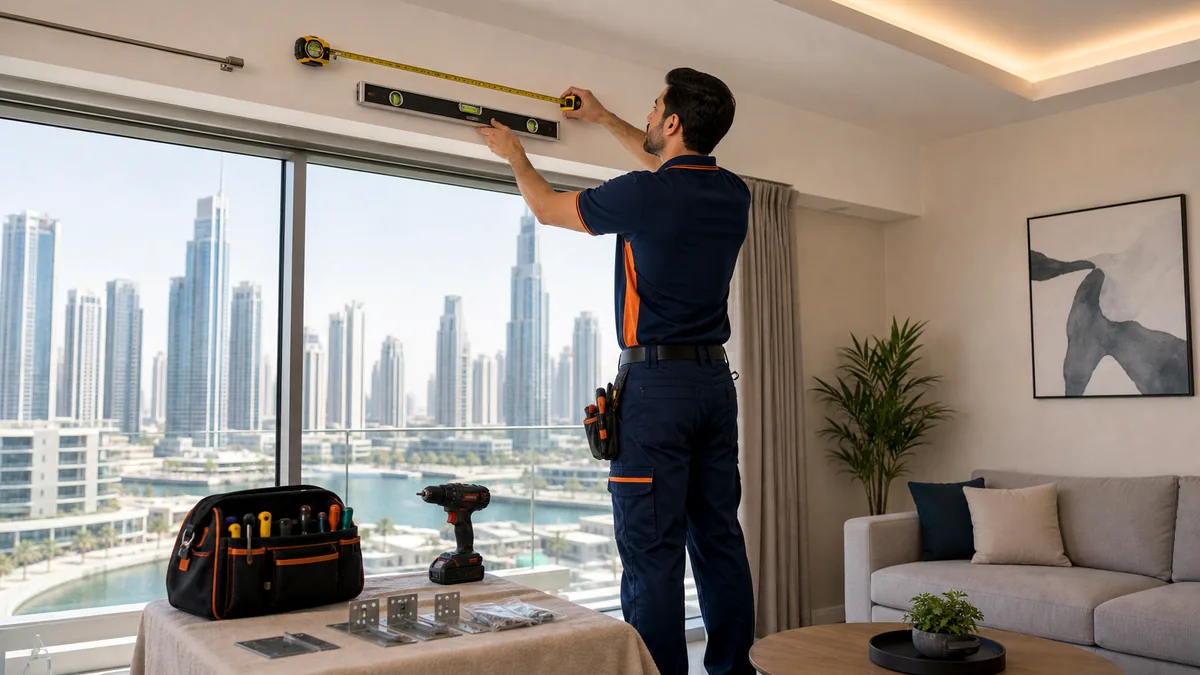 Guide Curtain and Blind Installation in Dubai Rentals Plan curtain, blind, and track installation in Dubai rentals without damaging walls, ceilings, or your move-out handover.
 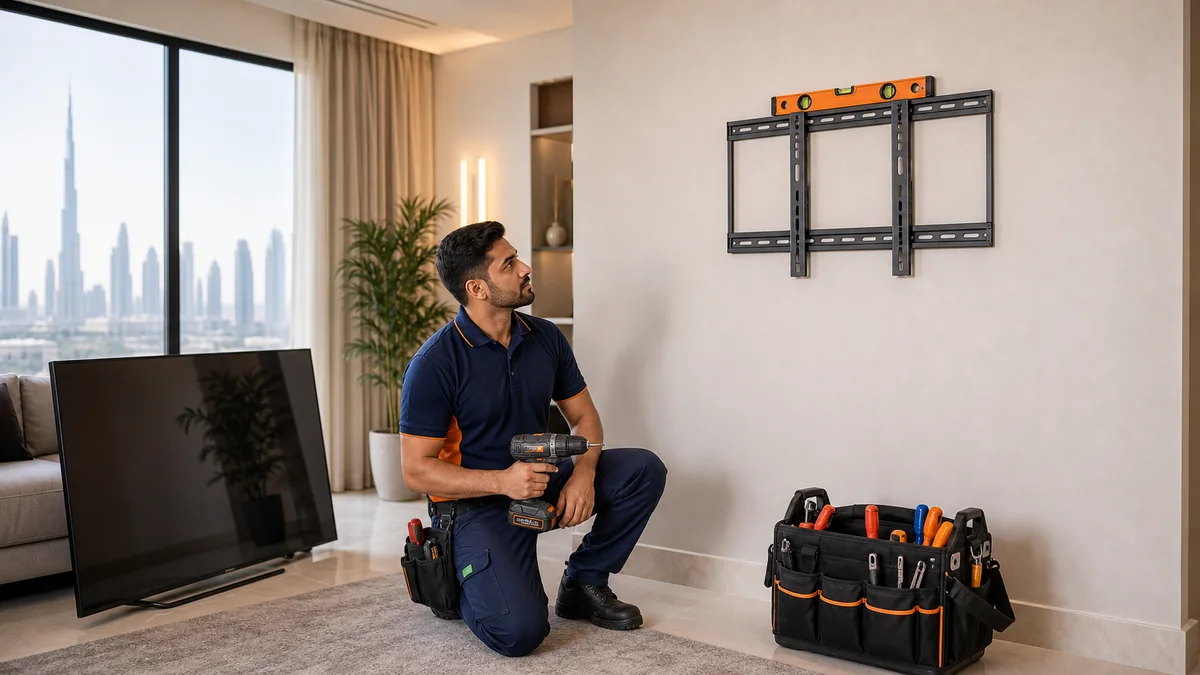 Guide Drywall vs Blockwork TV Mounting in Dubai Learn how to safely mount a large TV in Dubai apartments with drywall, gypsum, blockwork, concrete, and different wall anchor types.