
Master Guide
The Ultimate Dubai AC Survival Guide
Is your Dubai AC blowing warm air or leaking water? Read our master guide to cooling maintenance, troubleshooting, and system optimization.
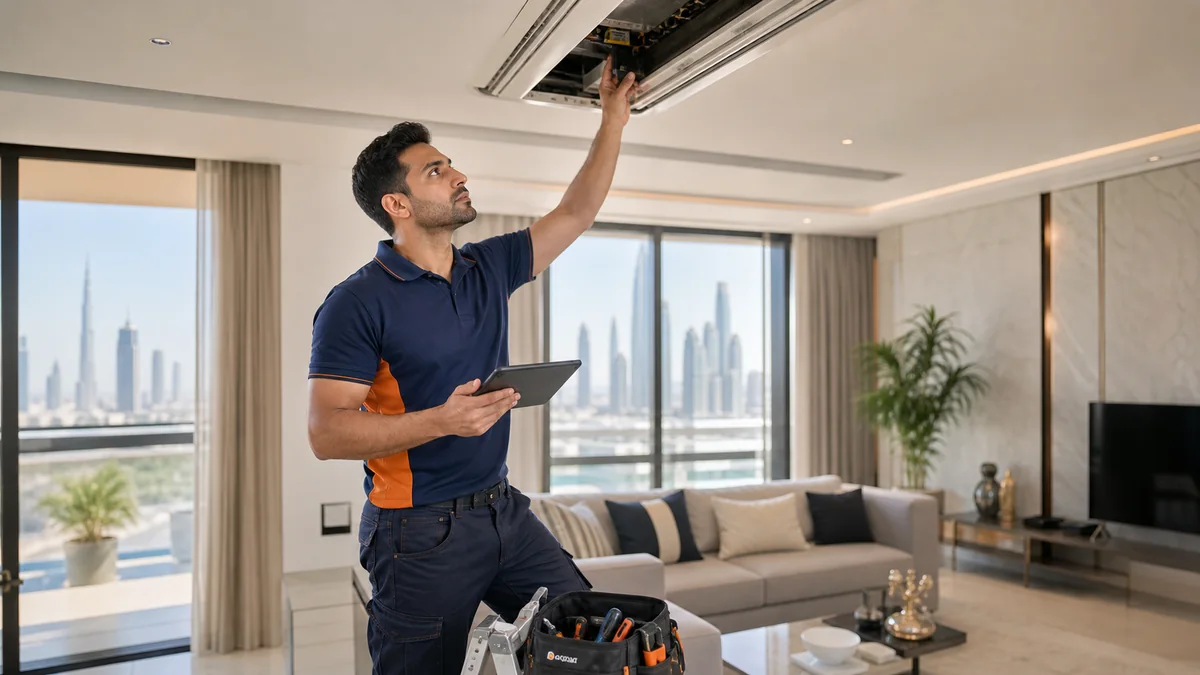
Living in Dubai means your home’s air conditioning system is not a luxury. It is critical infrastructure for your property. If your AC is weak, leaking, or blowing warm air, the most common causes are dirty filters, a blocked condensate drain line, or a cooling source that is not engaging properly.
This master guide explains how Dubai residential cooling systems work, what to check first, and when to book a technician. It also shows how preventive maintenance can protect ceilings, reduce avoidable DEWA bills, and keep apartments and villas comfortable before peak summer.
The Anatomy of Dubai Residential AC Systems
Most modern apartments and villas in Dubai rely on Fan Coil Units connected to centralized chillers, or independent split and ducted split systems. In some communities, residents also need to understand chiller vs Empower fees because cooling billing can be separate from normal electricity usage. Understanding the basic components helps you identify faults before they turn into costly breakdowns.
- The thermostat: The control point that monitors indoor air temperature and sends signals to activate cooling cycles.
- The evaporator coil: Located inside your ceiling, indoor unit, or mechanical closet. Refrigerant or chilled water passes through the coil, absorbing heat from indoor air.
- The blower fan: Draws warm air through a return grille, pushes it across the cold coil, and redistributes cooled air back into the room.
- The condensate drain line: As humid air hits cold coils, moisture condenses into water. This water should flow through a drain tray and PVC drain line.
Fan Coil Units in Dubai Towers
Many Dubai Marina, Downtown Dubai, Business Bay, JLT, and Palm Jumeirah apartments use FCUs connected to a central chilled water system. In these properties, the air handler in your ceiling may run perfectly while the chilled water valve fails to open.
That is why a resident may feel strong airflow but no cooling. The issue is not always a dirty filter or low gas; it may be a valve actuator, control signal, blocked strainer, or building-side chilled water problem.
Split and Ducted Split Systems in Villas
Villas in Arabian Ranches, Dubai Hills, The Springs, Jumeirah Park, and Damac Hills often use split, ducted split, or package units. These systems usually depend on an indoor evaporator unit and an outdoor condenser or compressor.
When the outdoor unit struggles, the indoor fan may still blow air, but the air will feel warm. Common causes include a failed capacitor, dirty condenser coil, compressor fault, refrigerant leak, or electrical protection issue.
Why Dubai Conditions Are Hard on AC
Dubai AC systems work through heat, humidity, fine dust, and long daily operating hours. Even a well-installed system can lose performance if filters, coils, drain trays, and electrical components are ignored.
The goal of maintenance is not only to make air cold today. The real goal is to keep airflow, drainage, electrical safety, and heat exchange stable before a breakdown happens in July or August.
Stuck in the heat right now? If your AC has completely shut down or is blowing hot air, do not wait for your apartment to overheat. Request AC emergency help or Request AC Help.
Step-by-Step Emergency Troubleshooting Checklist
Before you pay for a professional service call, run through these four diagnostic checkpoints.
Checkpoint 1: The Thermostat Interface
Verify that your thermostat display is active. If the screen is blank, the system may have a tripped circuit breaker or require fresh batteries. Make sure the mode is set to Cool and the fan setting is Auto or High, not Fan Only.
Checkpoint 2: The Return Airflow Strength
Place your hand against a supply vent. Is the air coming out cold but weak? Or is the air pressure strong but warm?
- Weak but cold air usually points to a blocked filter, dirty coil, or failing blower motor.
- Strong but warm air often means the indoor fan is working, but the compressor, chilled water valve, or cooling source is not engaging.
Checkpoint 3: The Circuit Breaker Status
Locate your main electrical Distribution Board and look for switches labeled AC, FCU, FAHU, or HVAC. If a breaker has tripped to OFF, flip it back once.
If it trips again immediately, leave it OFF and request professional help. A repeated trip can indicate a short circuit, damaged wiring, or a seized motor.
Checkpoint 4: Signs of Water Leakage
Look for ceiling stains, water around the indoor unit, dripping from vents, or wet plasterboard. These usually point to a blocked drain line or overflowing condensate tray.
If water is near sockets, lights, or the DB board, treat it as urgent. Switch off the affected AC circuit if safe to do so and avoid touching wet electrical points.
Checkpoint 5: Smells and Noise
A dusty smell at startup usually points to dirty filters or dusty ducts. A musty smell often means moisture, slime, or biological buildup around the coil and drain tray.
Grinding, rattling, or buzzing should not be ignored. These sounds may come from a worn blower motor, loose panel, failing capacitor, or outdoor condenser problem.
Checkpoint 6: Room-by-Room Temperature Difference
Walk through each room and compare airflow and temperature. If one bedroom is warm while the rest of the apartment is cool, the issue may be a damper, duct branch, thermostat zoning, or room-specific airflow restriction.
If the whole property is warm, the problem is more likely at the main cooling source. In a tower, that can involve chilled water valves or building-side cooling; in a villa, it may involve the condenser or compressor.
Deep Coil Washing vs. Basic Filter Cleaning
A major point of confusion for Dubai tenants and landlords is the difference between a filter wash and a proper AC service.
| Basic Filter Clean | Deep Coil Wash |
|---|---|
| Usually takes around 15 minutes | Usually takes 60 to 90 minutes |
| Removes mesh filters | Accesses coil and drain tray area |
| Rinses surface dust | Flushes deeper dust, slime, and buildup |
| Improves basic airflow | Restores heat exchange and cooling performance |
| Useful every 1 to 2 months | Recommended at least 1 to 2 times per year |
When fine desert dust slips past mesh filters, it can cake onto wet evaporator coils, forming a barrier that reduces cooling. A deep coil wash removes that layer and helps restore cooling efficiency.
When a Filter Clean Is Enough
A filter clean may be enough when cooling is generally normal but airflow feels slightly weak. It is also useful when the AC starts with a dusty smell after several weeks of heavy use.
For many apartments, the resident or building team can rinse removable mesh filters. The important point is to let filters dry properly before reinstalling them so moisture does not create smell or mold.
When a Coil Wash Is Needed
A coil wash is needed when filters are clean but cooling is still weak. It is also a strong option when the unit smells musty, the tray is dirty, or the AC has not had a professional service in a long time.
In Dubai, coil washing is especially useful before summer because the system will soon run for longer hours. A neglected coil makes the AC work harder and can push up avoidable electricity usage.
Why Cheap AC Cleaning Can Become Expensive
Low-cost cleaning sometimes means only the visible filter is rinsed. That may look like maintenance, but it does not fix a dirty coil, blocked drain tray, weak capacitor, or failing motor.
Good AC service should include inspection, airflow observation, visible leak checks, drain condition, and clear notes on anything outside the basic service. That is how a customer understands whether the issue is cleaning, repair, or replacement.
Preventing Common Indoor AC Water Leaks
Water dripping from your ceiling or wall is often caused by a blocked condensate drain line. Dubai’s humid air means your AC pulls water out of the air daily. Dust mixes with this water, forming bacterial slime in the tray and drain line.
When the drain blocks, the tray overflows into ceiling voids, plasterboard, and walls. That can lead to paint damage, mold smells, and expensive ceiling repair. In towers with strict Emaar/Nakheel community entry regulations, fast access details can also decide how quickly a technician reaches the unit.
How GetItFixed Resolves This
Our technicians inspect the tray, drain slope, outlet, and surrounding ceiling area. Where needed, they clear the drain line using suction, pressure, or specialist drain-cleaning tools and advise whether preventive tablets or follow-up servicing are needed.
Early Warning Signs of a Drain Problem
Do not wait until water pours through the ceiling. Early warning signs include a wet patch near the AC access panel, water marks around a vent, gurgling sounds, musty smell, or repeated stains after every cooling cycle.
If the same AC leaks again after a quick drain clearing, ask for a wider inspection. The line may have poor slope, a cracked tray, algae buildup, missing insulation, or a poor previous repair.
What Not to Do During an AC Leak
Do not keep running the unit to “see if it clears itself.” More condensation can overflow the tray and make ceiling damage worse.
Do not open ceiling panels aggressively if you are unsure what is above them. There may be wiring, sharp framing edges, fragile gypsum, or water collected inside the void.
Do not pour harsh chemicals into AC drains without knowing the pipe path. Some chemicals can damage components or leave odors inside the property.
AC Maintenance Frequency for Dubai Homes
There is no single schedule that fits every property. A small studio used occasionally does not need the same level of preventive maintenance as a five-bedroom villa running multiple units every day.
Still, Dubai homes usually benefit from a more disciplined schedule than cooler climates. Heat, humidity, dust, and heavy summer usage make AC maintenance a routine property care item.
| Property Type | Suggested AC Care |
|---|---|
| Studio or 1BR apartment | Filter cleaning every 1 to 2 months, professional service before summer |
| 2BR to 3BR apartment | Filter cleaning regularly, professional service 1 to 2 times per year |
| Villa or townhouse | Professional service 2 to 4 times per year depending on usage |
| Short-term rental | Faster inspections between guests, especially before peak summer stays |
If you manage a rental property, maintenance records matter. A clear service history helps landlords, tenants, and property managers understand whether a fault is sudden, seasonal, or caused by long-term neglect.
Cooling Efficiency and DEWA Bills
An AC does not need to fully fail to waste money. A dirty coil, weak airflow, blocked return grille, or poor thermostat setting can slowly increase power usage.
If your DEWA bills rise sharply without a clear lifestyle change, AC efficiency should be part of the review. The cause may be dirty filters, poor insulation, doors not sealing, a thermostat reading incorrectly, or a unit running too long to reach set temperature.
Thermostat Habits That Help
Set temperatures realistically. Very low settings can make the system run for longer without improving comfort much, especially when the property has heat gain from windows or poor sealing.
Keep doors and windows closed while cooling. In humid weather, open doors pull moisture into the property and make the AC remove more water from the air.
Do not block return air grilles with furniture. If the system cannot pull enough warm air back through the return, cooling balance drops across the property.
Building and Community Factors
In some towers, cooling performance also depends on building-side chilled water temperature and flow. If many residents complain at the same time, the fault may not be inside your unit.
In villas, outdoor condenser location matters. Units surrounded by dust, blocked airflow, or direct heat buildup may struggle more than units with clear ventilation.
When Repair Makes Sense vs Replacement
Not every AC fault means replacement. Many issues are repairable when the unit is otherwise in good condition and parts are available.
Repair often makes sense for blocked drains, dirty coils, weak capacitors, thermostat faults, minor wiring issues, blower service, and accessible valve or actuator problems. Replacement becomes more likely when the compressor has failed, coils are badly corroded, or the system is old and repeatedly breaking down.
For landlords, the decision should be documented. If a tenant only approves a temporary fix despite clear warnings about an old unit, the invoice notes should explain the remaining risk.
For owners, the decision is usually financial. Compare the repair cost, age of unit, expected remaining life, comfort level, and energy performance before deciding.
AC Maintenance for Landlords, Tenants, and Holiday Homes
AC disputes are common in Dubai rentals because cooling is essential. Tenants want immediate comfort, landlords want fair costs, and agents need evidence before approving bigger work.
The best workflow is simple: document symptoms, inspect professionally, separate minor maintenance from major component failure, and record approvals before work begins. Our Dubai RERA maintenance responsibility guide explains this in more detail.
For Tenants
Report AC problems early, especially leaks and repeated breaker trips. Waiting until the ceiling is damaged can make the issue more expensive and harder to assign fairly.
Share photos, videos, thermostat readings, and the affected room. If building access is needed, confirm security instructions before the technician arrives.
For Landlords
Keep records of AC servicing, repairs, and tenant reports. A planned maintenance history protects the asset and makes disputes easier to resolve.
Older systems may need an initial stabilization visit before being placed under an annual maintenance package. That protects both the customer and the maintenance team from unrealistic expectations.
For Holiday Home Operators
Short-term rentals need faster AC triage because guest comfort affects reviews. A warm room in July can create refund pressure and damage platform ratings.
Between-stay inspections should include thermostat checks, airflow, visible leaks, and quick filter review. The goal is to catch problems before check-in, not after a guest complains.
Deep-Dive Sub-Guides
To expand your technical knowledge or handle specific niche issues, explore these detailed guides:
- Evaluate whether your system needs an AC Coil Wash vs Filter Cleaning to optimize your airflow.
- Discover the immediate structural steps on How to Prevent Indoor AC Water Leaks to protect your ceiling and walls.
- Run through our diagnostic sequence on Why Is My AC Blowing Warm Air? to test airflow, thermostat, and cooling source issues.
- Learn how to identify Chilled Water vs Split AC in Dubai before booking the wrong repair.
- Review Dubai AC Black Dust and Musty Smell Guide if vents smell stale or show dark marks.
- Use Dubai Thermostat Settings to Lower DEWA Bills if your cooling costs are rising.
- Understand Who Pays for AC Maintenance Under Dubai RERA Guidelines? when an AC issue becomes a rental dispute.
When to Contact GetItFixed
Book professional help when basic checks do not restore cooling. You should also contact a technician quickly for water leaks, repeated breaker trips, burning smells, blank thermostats, loud mechanical noises, or rooms that never reach temperature.
For urgent cooling failure, send your location, community name, short video, and any thermostat or DB board photos. Those details help the technician prepare before arrival.
For non-urgent servicing, book before the hottest months. Preventive work is easier to schedule, less stressful, and usually better for the long-term condition of the system.
Secure Year-Round Cooling Peace of Mind
The best way to prevent summer breakdowns is scheduled preventive care. Our Annual Maintenance Contracts provide structured AC servicing, priority support, and clear maintenance planning for Dubai apartments and villas.
For one-time AC help, book AC maintenance and repair.
Dubai AC Support
Weak cooling, water leaks, or warm air? Get the AC checked before peak heat.
Send your AC symptom, thermostat photo, room temperature, and community. We will guide whether it looks like filters, coils, drains, chilled water, or a service visit.
Quick Answers
Frequently asked questions
How often should I service my AC in Dubai?
Most Dubai homes should clean filters regularly and schedule professional AC servicing at least once or twice per year, especially before summer.
Why is my AC leaking water indoors?
Indoor AC leaks are usually caused by a blocked condensate drain line, dirty tray, poor drain slope, or a frozen coil melting suddenly.
Can AC maintenance reduce DEWA bills?
Clean filters, clean coils, and clear airflow can help the AC run more efficiently, which may reduce avoidable electricity usage in Dubai homes.
Deep-Dive Technical Guides
Specialized troubleshooting resources
 Guide Dubai Thermostat Settings to Lower DEWA Bills Learn practical Dubai summer thermostat habits that reduce AC strain, improve comfort, and help avoid unnecessary DEWA bill spikes.
 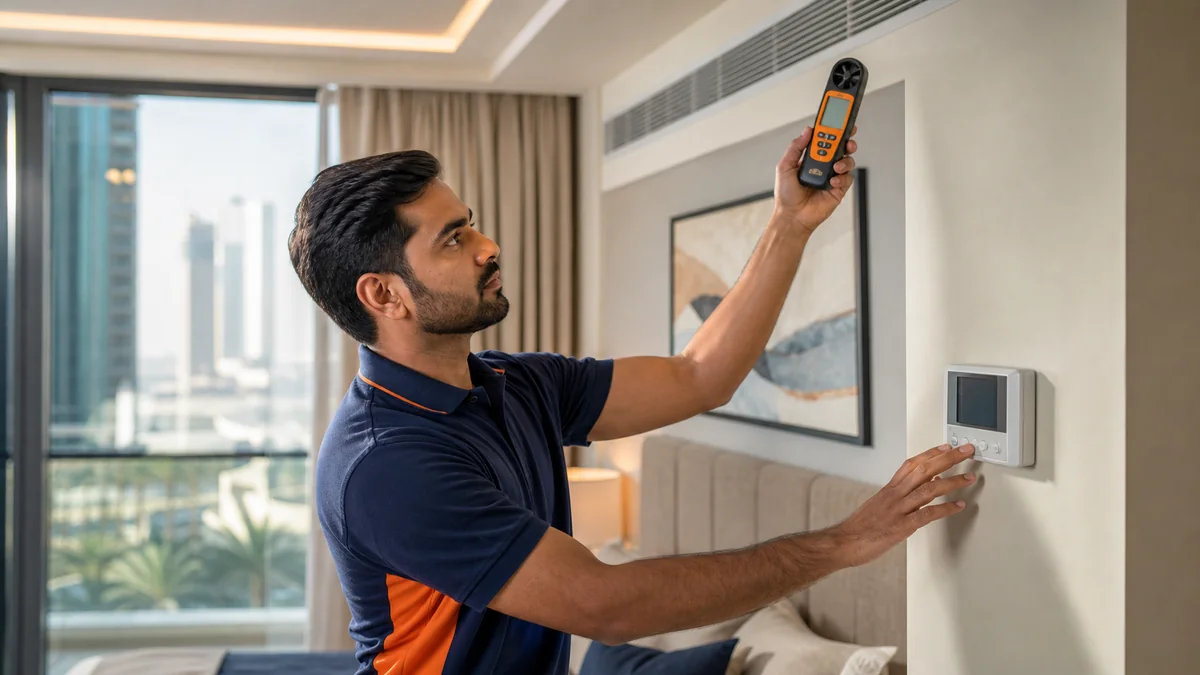 Guide Why Is My AC Blowing Warm Air? Dubai AC blowing warm air? Learn the most common thermostat, airflow, compressor, drain, and maintenance causes before booking a technician.
 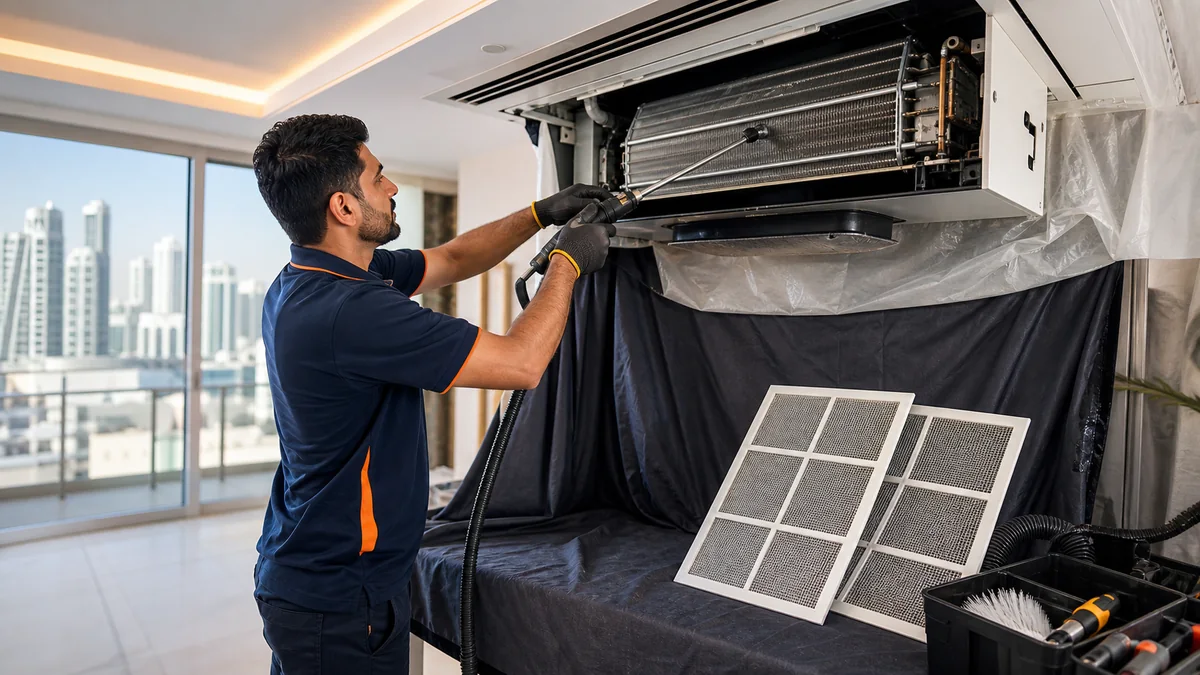 Guide AC Coil Wash vs Filter Cleaning Understand the difference between AC filter cleaning and deep coil washing for Dubai apartments and villas, and when each service is needed.
 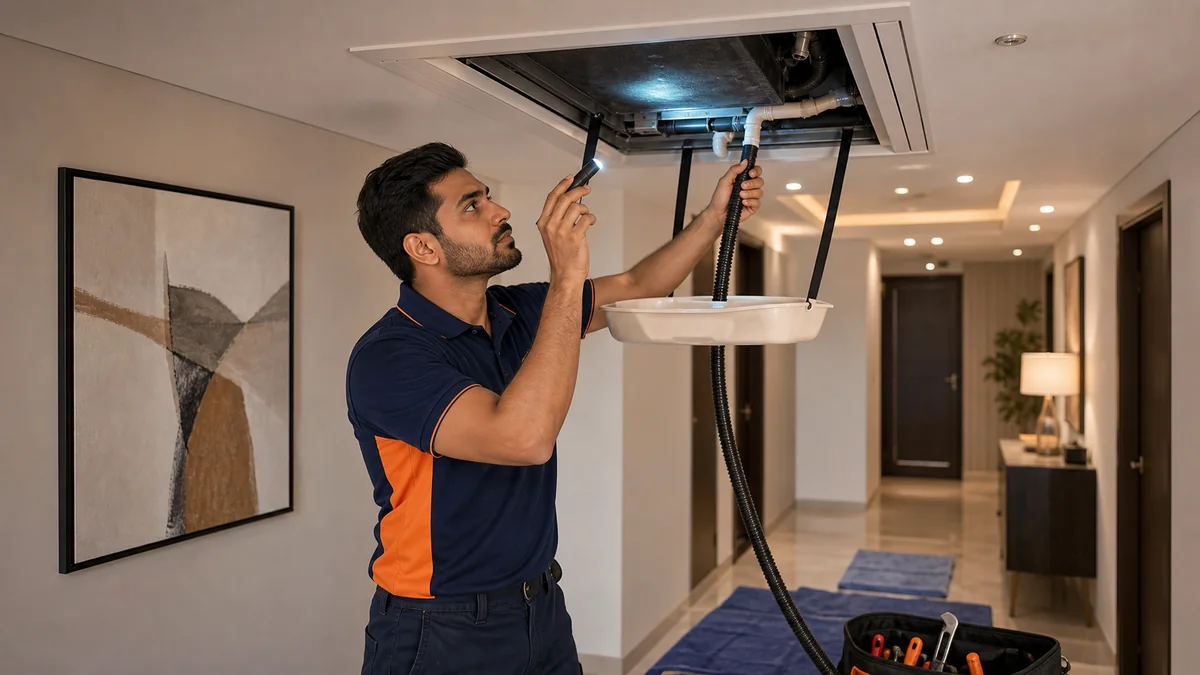 Guide How to Prevent Indoor AC Water Leaks Learn why Dubai AC units leak water indoors, how blocked condensate drains happen, and when to call for AC drain line service.
 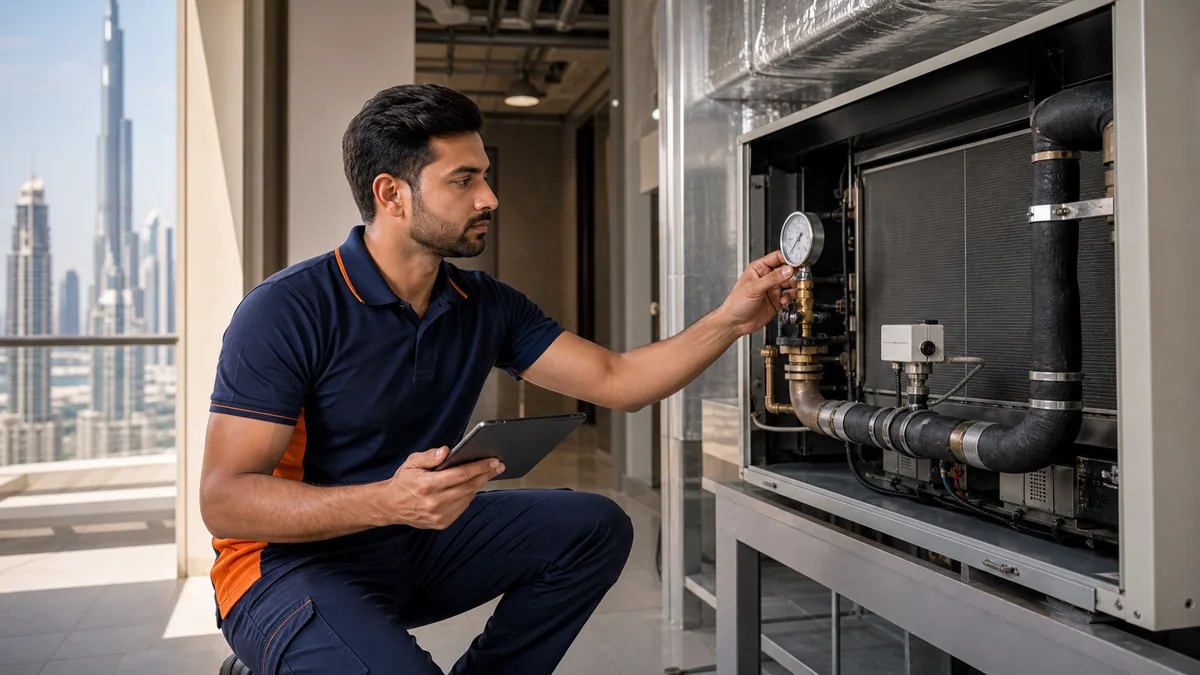 Guide Chilled Water vs Split AC in Dubai Learn how Dubai chilled water AC systems differ from split AC units, and why your apartment may blow warm air even when the fan runs.
 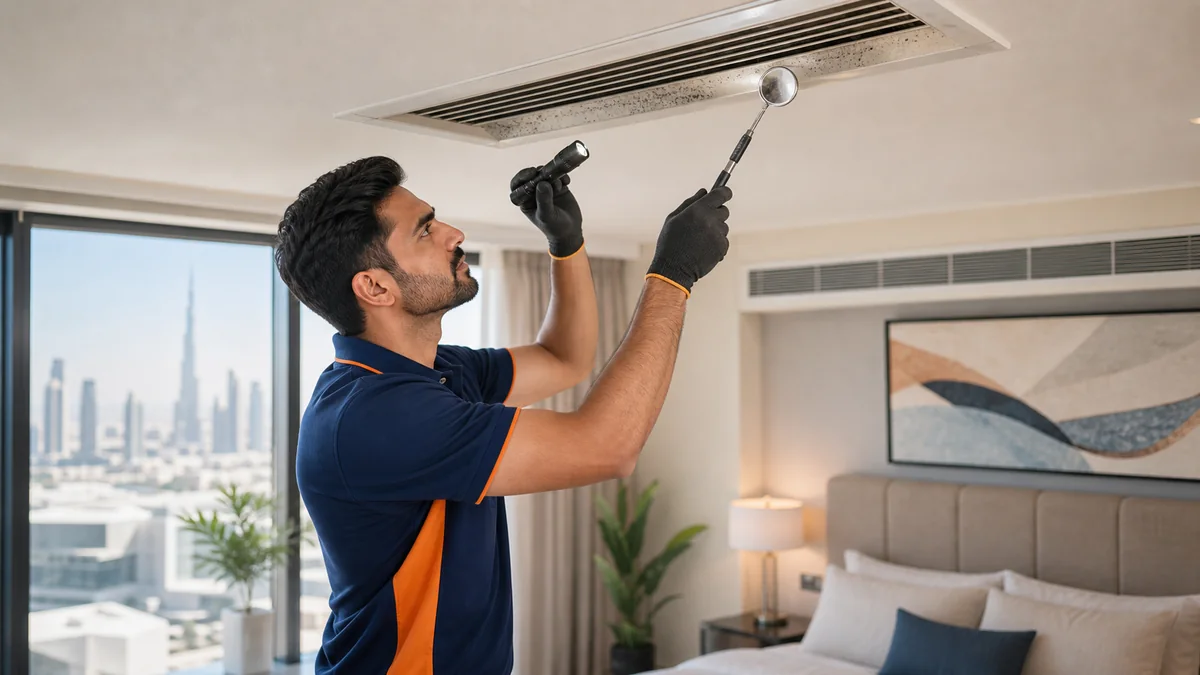 Guide Dubai AC Black Dust and Musty Smell Guide Find out why Dubai AC vents blow black dust or smell musty, and when filter cleaning, coil washing, or disinfection is needed.